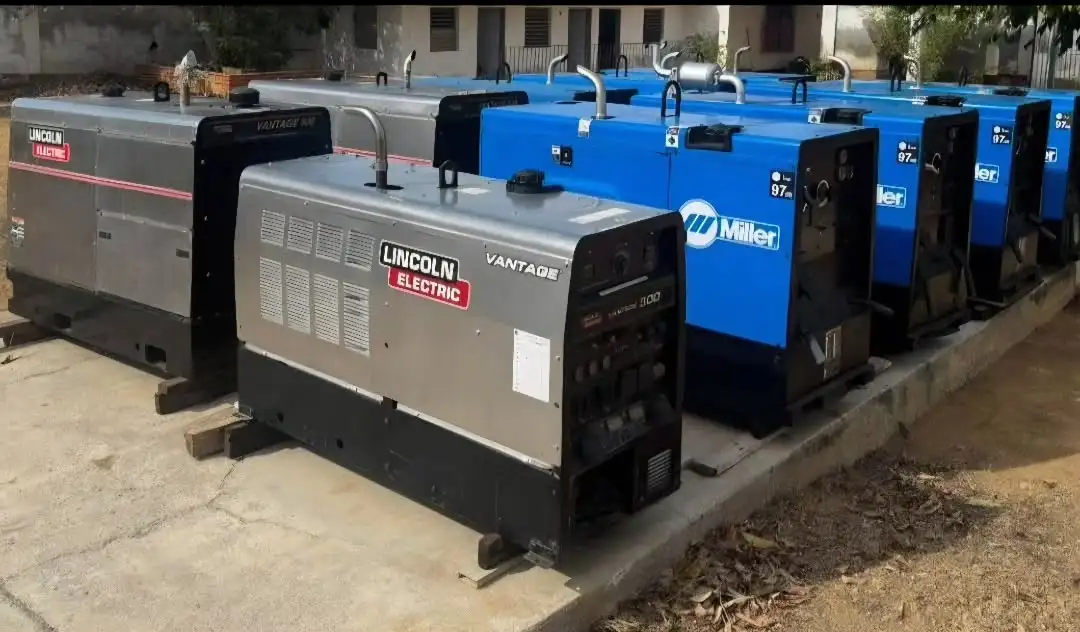

How to Buy a Used Welding Machine: The Complete Buyer's Guide
Buying a used welding machine can save you thousands of dollars over a new one — but only if you know what to check first. Miller and Lincoln machines are built to last decades, which is exactly why the used welder market is so strong, and also why it’s full of machines in wildly different condition selling at wildly different prices.
What to Look For and Test before Buying a Used Welder – Here’s what you need to examine, test, and investigate before you spend money on used farm auction or Facebook Marketplace Welder, or even used equipment dealer such as WelderVault.
Quick Answer
A good used welding machine has low run hours relative to its age, a clean and un-tampered control panel, no rust or oil leaks around the engine or generator (for engine-driven units), and a duty cycle that still holds to factory spec. As a rule of thumb, a well-maintained used welder costs 40-70% less than a comparable new machine, depending on brand, hours, and included accessories.
1. Is Buying a Used Welder Worth It?
Miller and Lincoln both build machines meant to run for 15-20+ years of regular use, which means a 10-year-old machine can still have most of its working life ahead of it. The main reasons buyers go used:
- Lower upfront cost — often the biggest factor, especially for engine-driven and multi-process machines.
- Proven reliability — a machine that’s run for years without major failure has already shown you its weak points.
- Availability — some older models (like classic Lincoln SA-200s) have a loyal following because they were simply built better than some newer equivalents.
- Resale value — Miller and Lincoln machines hold value well, so buying used and reselling later rarely means a steep loss.
The tradeoff is that you’re inheriting someone else’s maintenance history — good or bad. That’s what the rest of this guide is for.
2. Know What You’re Buying: Machine Types
Before you evaluate a specific unit, make sure you’re buying the right category of machine for your work.
| Type | Best For | Things to Know |
|---|---|---|
| Stick (SMAW) | Farm, field repair, thick/dirty metal | Most forgiving in rough conditions, simplest to maintain |
| MIG (GMAW) | Fabrication shops, sheet metal, production work | Needs cleaner metal and shielding gas; faster for thin material |
| TIG (GTAW) | Precision work, aluminum, stainless, thin material | Highest skill ceiling, most sensitive electronics |
| Engine-Driven | Farms, ranches, pipeline, remote job sites | Combines welder + generator; more to inspect (engine + welding unit) |
| Multi-Process | Shops that need flexibility | More complex electronics = more that can go wrong used |
If you’re not sure which category fits your work, that’s worth figuring out before you start shopping — it narrows the field fast.
3. Used Welder Inspection Checklist
This is the part that actually protects your money. Go through this used welder inspection checklist in person whenever possible — never sight-unseen.
Exterior and Physical Condition
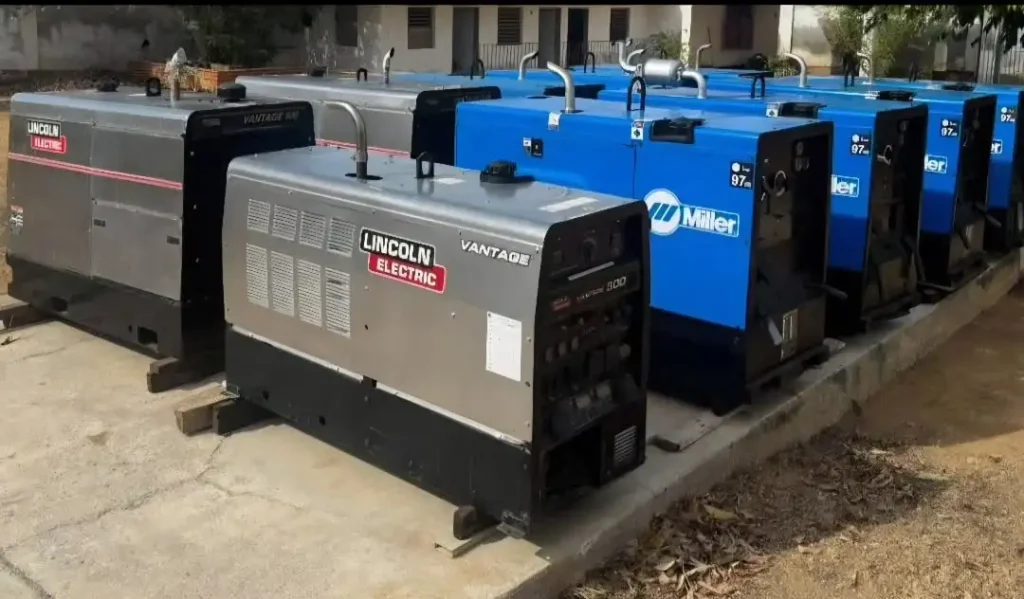
- Check for rust, especially on the base, wheels, and control panel — rust often means outdoor storage and possible internal moisture damage.
- Look for oil or coolant leaks under engine-driven units.
- Inspect the power cord, leads, and connectors for cracking, exposed wire, or amateur repairs (electrical tape is a red flag, not a fix).
- Check that all original knobs, dials, and covers are present — missing parts often mean something failed and was never properly replaced.
Run Hours and Age
- Ask for the hour meter reading (if equipped) or serial number so you can look up the manufacture date.
- Compare hours to age: a 10-year-old machine with 500 hours has lived an easy life; one with 8,000 hours has worked hard and needs closer inspection.
- Ask directly what the machine was used for (hobby, farm, production shop, rental fleet). Rental and production machines see the hardest use.
Functional Testing (Do Not Skip This)
- Start it and run a bead. A seller unwilling to let you test the machine on load is a major red flag.
- Test at low, medium, and high amperage settings — weak spots often only show up at higher output.
- Listen for unusual noise from the engine, fan, or generator windings.
- Check that the duty cycle holds — run it near its rated output for several minutes and watch for thermal shutdown sooner than the spec sheet allows.
- For engine-driven units, check idle-down/auto-idle function and confirm the engine doesn’t smoke, surge, or stall under load.
Documentation
- Ask for maintenance records if available — regular oil changes and filter replacements on engine-driven machines matter as much as the welding side.
- Confirm whether it’s the original owner or has changed hands multiple times (more owners can mean more unknowns).
4. Common Problems by Machine Type
| Issue | Common In | What It Means |
|---|---|---|
| Weak or inconsistent arc | Any used welder | Worn contactor, dirty connections, or failing control board |
| Engine won’t hold idle | Engine-driven (Bobcat, Ranger, SA-200) | Carburetor issue or worn governor — fixable, but factor into price |
| Overheating / thermal shutdown early | High-hour machines | Failing fan, blocked airflow, or degraded internal components |
| Wire feed issues | MIG units | Worn drive rollers, liner, or contact tip — cheap fix, but check anyway |
| Corroded output studs/lugs | Farm and outdoor-stored units | Points to moisture exposure; check wiring behind the panel too |
None of these are automatic dealbreakers — they’re negotiation points. A machine with a known, minor issue at a fair price can be a better deal than a “perfect” machine priced like new.
5. Used Welder Price Guide: What Should You Actually Pay?
Used welder pricing depends on four things, roughly in order of impact:
- Model and original MSRP — a used Trailblazer will always cost more than a used entry-level stick welder, hours being equal.
- Run hours relative to age
- Condition and originality (has it been modified, repaired with non-OEM parts, or is it stock?)
- Included extras — leads, ground clamps, cart, gas regulator, spare tips/rollers add real value
As a rule of thumb, well-maintained used Miller and Lincoln machines sell for meaningfully less than new — but scarce or highly sought-after models (like a clean Lincoln SA-200) can hold value close to new due to demand outpacing supply. Always compare against current listings for the same model and condition tier, not just the general “used welders” market.
6. Where to Buy a Used Welding Machine (and the Risk Level of Each)
| Source | Pros | Risk |
|---|---|---|
| Specialized used equipment dealers (like WelderVault) | Machines inspected/tested before sale, often warrantied, easier recourse | Higher price than private sale |
| Farm/estate auctions | Can find great deals, high volume | No testing allowed, “as-is,” no recourse |
| Facebook Marketplace / Craigslist | Lowest prices | No warranty, inconsistent honesty on condition, no return path |
| Manufacturer-certified used programs | Some factory backing | Limited availability, higher price |
If you’re buying private-party or at auction, treat every claim as unverified until you test it yourself.
7. Red Flags to Watch for When Buying a Used Welder
- Seller won’t let you plug it in and run a test bead
- Serial number plate is missing, damaged, or doesn’t match the listed model
- Fresh paint only on certain sections (often hides rust or damage)
- Price is significantly below every comparable listing you can find — there’s usually a reason
- Vague or evasive answers about how the machine was used
8. Final Checklist Before You Buy
- Confirmed model, age, and run hours Ran the machine under load and checked all amperage ranges
- Inspected for rust, leaks, and non-OEM repairs
- Compared price to similar listings for the same model and condition
- Confirmed what’s included (leads, cart, accessories)
- Got a return/warranty policy in writing if buying from a dealer
Related Guides
- [Miller vs. Lincoln: Which Used Welder Should You Buy?] — link once published
- [Used Miller Bobcat 250 Price Guide and Common Issues] — link once published
- [Used Lincoln Ranger 305 Buying Guide] — link once published
- [How to Test a Used Welder’s Engine and Generator Before Buying] — link once published
Frequently Asked Questions
How many hours is too many on a used welder?
No specific value exists for this; it depends on maintenance. With good maintenance, an engine driven welder will easily surpass 5,000 hours, whereas neglecting it may result in a shorter lifespan. The important factor in considering hours is in the context of maintenance.
Are Miller or Lincoln welders better to buy used?
Both brands have proven themselves reliable and valuable in resale. In the end, the best option depends on the particular model, its use, and the availability of spare parts and service for each brand locally.
Can I get financing on a used welding machine?
While some dealer financiers may still be willing to provide finance for used equipment, they will offer far less attractive terms than the finance packages for new machines. It’s worth directly asking whether your purchase will be affected by the equipment’s age.
Is it safe to buy a welder without testing it first?
It is dangerous – wherever you go to try and use the machinery, bring it with you to perform while it is loaded with work, or to make buy of which only deals that thoroughly analyse and supply quality in former used machinery.