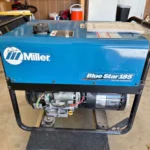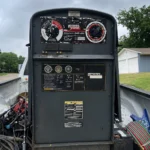

Miller Bobcat 225/250/260: Specs, Common Issues, and Resale Value
The Bobcat line is probably the single most common Miller welder you’ll run into on the used market, and there’s a reason it comes up over and over on farms, ranches, and job sites: it just doesn’t quit. But “the Bobcat is reliable” isn’t quite enough information when you’re staring at a specific used unit and trying to decide whether it’s worth the asking price.
This guide breaks down what the 225, 250, and 260 actually offer spec-wise, what tends to go wrong on them as they rack up hours, and what they’re realistically worth used — so you can walk into a deal knowing more than the seller expects you to.
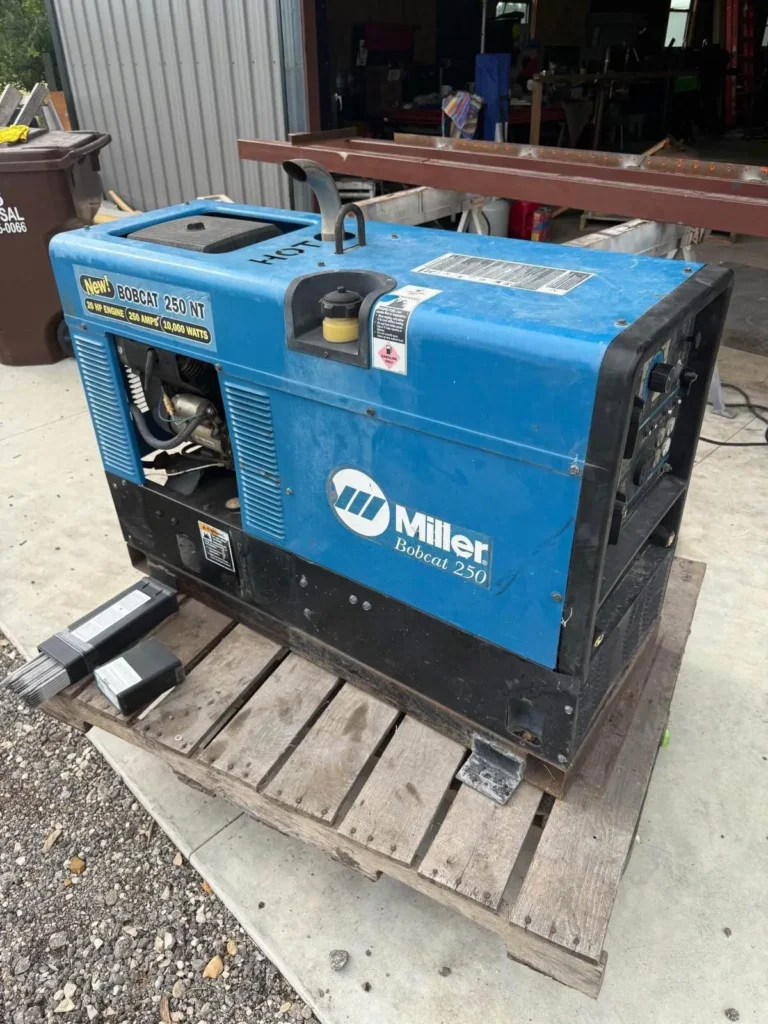
Quick Answer
The Miller Bobcat 250 is the most common of the three, offering up to 250A output, a 100% duty cycle at rated DC output, and roughly 9,500W of continuous generator power — enough to run most shop tools alongside welding. The 225 is the older, lower-output predecessor, and the 260 is the current-generation model with updated engine options. Common issues center on the engine (starting, idle, carburetor) more than the welding output itself. Expect to pay well under new pricing for a well-maintained used unit, with low-hour, clean examples holding value close to current retail due to steady demand.
1. Miller Bobcat 225 vs. 250 vs. 260: What's the Difference?
All three are engine-driven welder/generators built around the same core idea: stick and DC welding output paired with usable auxiliary generator power, small enough to fit in a truck bed.
| Model | Amperage Range | Rated Output | Generator Power | Notes |
|---|---|---|---|---|
| Bobcat 225 | Up to 225A | Lower duty cycle rating than the 250 | Similar auxiliary power class | Older, predecessor model — still common on the used market |
| Bobcat 250 | 40-250A | 250A at 25V, 100% duty cycle (DC) / 60% (AC) | ~9,500W continuous / 11,000W peak | The most widely available used, multiple engine options over the years (Kohler, Kubota diesel, LP) |
| Bobcat 260 | Similar range to the 250 | Comparable rated output | Similar generator power class | Current-generation model, often with EFI engine options for easier starting and better fuel efficiency |
Exact specs vary by engine option (gas, diesel, LP, EFI) and model year, so before buying, it’s worth confirming the specific spec sheet for the unit you’re looking at on millerwelds.com using the serial number.
2. What the Bobcat Line Is Actually Good At
- Stick welding in rough conditions — this is what the Bobcat was built for, and it’s still the strongest use case.
- Auxiliary generator power — enough to run a Multimatic, power tools, lighting, or basic shop equipment off the same machine.
- Portability — small enough to live in the back of a truck permanently, which is exactly how a lot of farm and field units spend their whole life.
- Simplicity — especially on older, non-EFI models, there’s not much electronics to fail, which is part of why these machines have such a long service life.
3. Common Problems on a Used Bobcat
Across the 225, 250, and 260, the issues that come up most tend to be engine-related rather than welding-output related — which makes sense, since the engine runs constantly while the welding side only works when you pull the trigger.
| Issue | What Causes It | How Serious |
|---|---|---|
| Hard cold starting | Carburetor buildup, old fuel, worn spark components | Usually fixable, but a real inconvenience if untreated |
| Rough or surging idle | Governor or carburetor issues | Moderate — often a sign of deferred maintenance |
| Auto-idle not engaging | Wiring or sensor issue | Moderate — annoying but rarely expensive to fix |
| Weak or inconsistent arc | Worn contactor, dirty connections | Moderate — cheap fix if caught early |
| Generator power drop under load | Worn brushes or windings on older units | More serious — worth a real inspection before buying |
| Rust on base/frame | Outdoor storage | Cosmetic usually, but check for matching internal corrosion |
None of these are automatic dealbreakers on their own. A Bobcat with a known, minor issue at a fair price can be a smarter buy than a “flawless” one priced like new — as long as you know what you’re actually looking at.
4. What's a Used Bobcat Actually Worth?
Pricing on a used Bobcat comes down to the same handful of factors every time:
- Hours relative to age — a low-hour Bobcat that’s clearly been babied commands a real premium.
- Engine type and condition — diesel and EFI models often price higher than base gas models, and engine condition matters as much as the welding side.
- Originality — stock, unmodified units with OEM parts hold value better than machines with non-original repairs.
- What’s included — leads, cart, and accessories add real value on top of the base machine.
Because the Bobcat is one of the most in-demand used welders on the market, well-maintained examples — especially the 250 — tend to hold value better than less popular models, and clean, low-hour units can sell close to current retail pricing simply because demand consistently outpaces supply.
5. Quick Inspection Checklist for a Used Bobcat
- Check the serial number and cross-reference the manufacture date and spec sheet on Miller’s site
- Start it cold if possible — a hard cold start is one of the most telling tests
- Confirm auto-idle engages and disengages properly
- Run a bead at low, medium, and high amperage
- Check generator output under a real load, not just a light bulb
- Inspect for oil leaks, rust, and non-OEM repairs
- Ask about maintenance history — oil changes matter as much on this side as the welding output
For the full walkthrough with more detail on every step, our complete used welder inspection checklist covers this in depth and applies directly to the Bobcat line.
How many hours does a Miller Bobcat 250
With regular maintenance, a Bobcat 250 can run well past 5,000-6,000 hours. Engine care — oil changes and basic upkeep — matters more to longevity than the welding side does, since the engine runs continuously while the welder only draws load intermittently.
Is the Miller Bobcat 250 a good welder?
Yes — it’s one of the most widely used and trusted engine-driven welders in farm, ranch, and field applications, largely because of its simplicity and long track record of reliability.
What's the difference between the Bobcat 225 and 250?
The 250 offers a higher rated output and duty cycle than the older 225, and is generally the more sought-after model on the used market as a result. The 260 is the current-generation successor with updated engine options.
Related Guides
- How to Inspect a Used Miller Welder Before You Buy
- Miller Welders for Sale: A Buyer’s Guide to Finding the Right Used Model
- How to Buy a Used Welding Machine: The Complete Buyer’s Guide
- Miller vs. Lincoln: Brand Comparison for Farm, Shop, and Field Welding
Looking for a used Miller Bobcat? Every machine at WelderVault is inspected and tested before it’s listed — browse our current inventory to see what’s available.